Buying sneakers in the UAE: a complete guide for 2026
What sneakers cost in Dubai, when importing is worth it, how to authenticate a pair, and the fees that turn a good price into a bad one.
There’s a story people tell about sneaker buying that involves grails, hype tax and paying triple retail. It makes for good content. It’s also a poor description of what the UAE market actually is.
Across the House of Stox sneaker catalogue on 27 August 2026, 643 pairs carried a live seller-set ask, and the median was AED 899 — about 1.6× US retail. Six in ten were under AED 1,000 and nine in ten under AED 2,000. This is a market of mainstream retros at a moderate premium with a thin tail of genuine grails — not a market of trophies, and not a bargain bin either.
This guide covers what that means in practice: what things cost, when importing is worth the friction, how to check a pair is real, and where the money actually leaks.
What sneakers cost here
| Metric | Figure |
|---|---|
| Pairs listed | 1,102 |
| With a live seller-set ask in AED | 643 |
| Ask range | AED 187 – 30,000 |
| Median ask | AED 899 |
| Mean ask | AED 1,204 |
| Median ask ÷ converted US retail | 1.6× |
The distribution matters more than the average:
| Band | Share of live asks |
|---|---|
| Under AED 500 | 13% |
| AED 500 – 999 | 46% |
| AED 1,000 – 1,999 | 32% |
| AED 2,000 – 4,999 | 6% |
| AED 5,000+ | 2% |
59% of pairs with a live ask are under AED 1,000, and 92% are under AED 2,000. Measured against US retail, the median ask is 1.6× — a premium, but a moderate one, and 12% of live asks actually sit below converted retail. That should reset expectations in both directions: this is not triple-retail territory, and it is not cheaper than America.
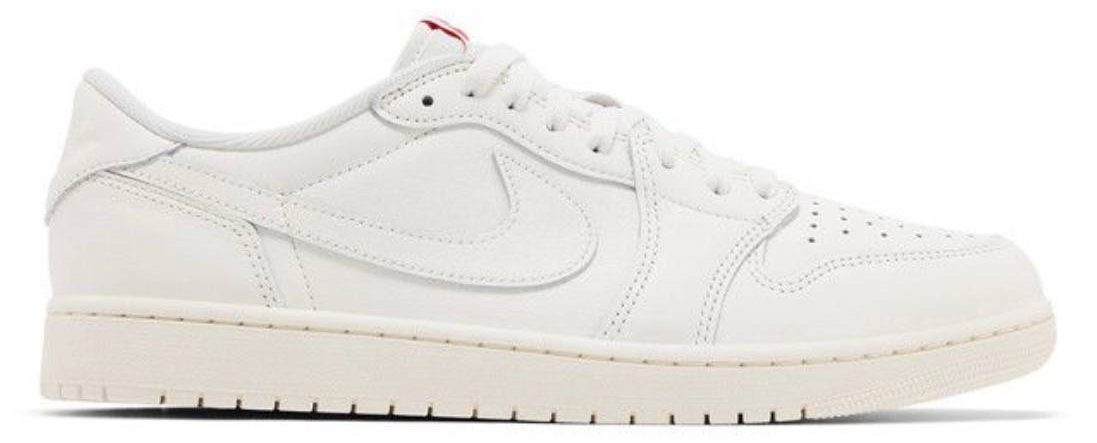
By volume, the market is Jordan (369 listings) and Nike (343), then Adidas (163), Nike SB (61), ASICS (32), On (30) and New Balance (23).
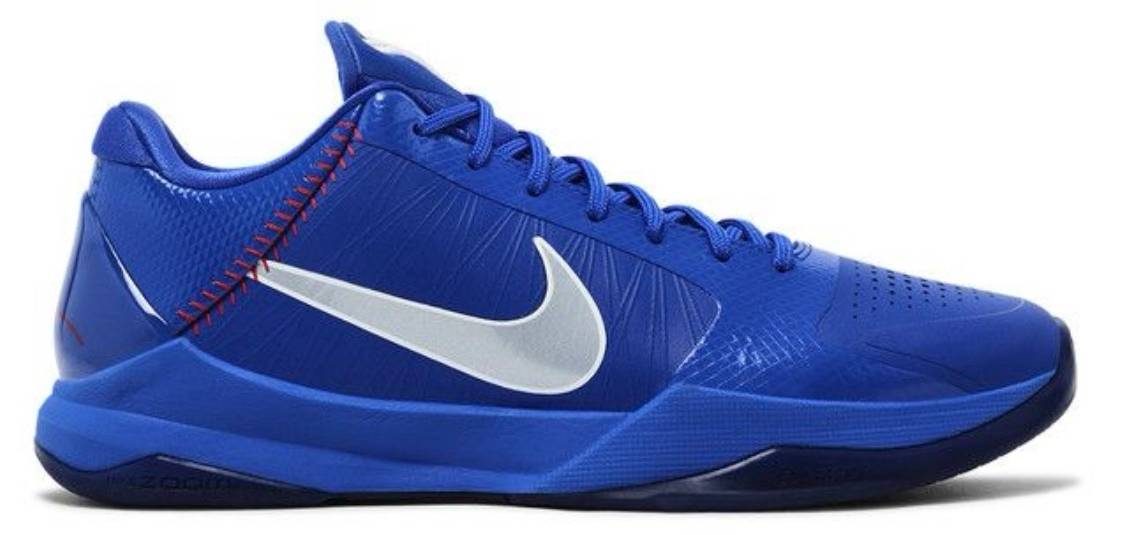
By model, medians run: Kobe AED 1,270, New Balance AED 1,250, Yeezy AED 925, Dunk AED 699. Against US retail, Yeezys carry the smallest premium (median 1.3×) and Kobes the largest (1.9×).
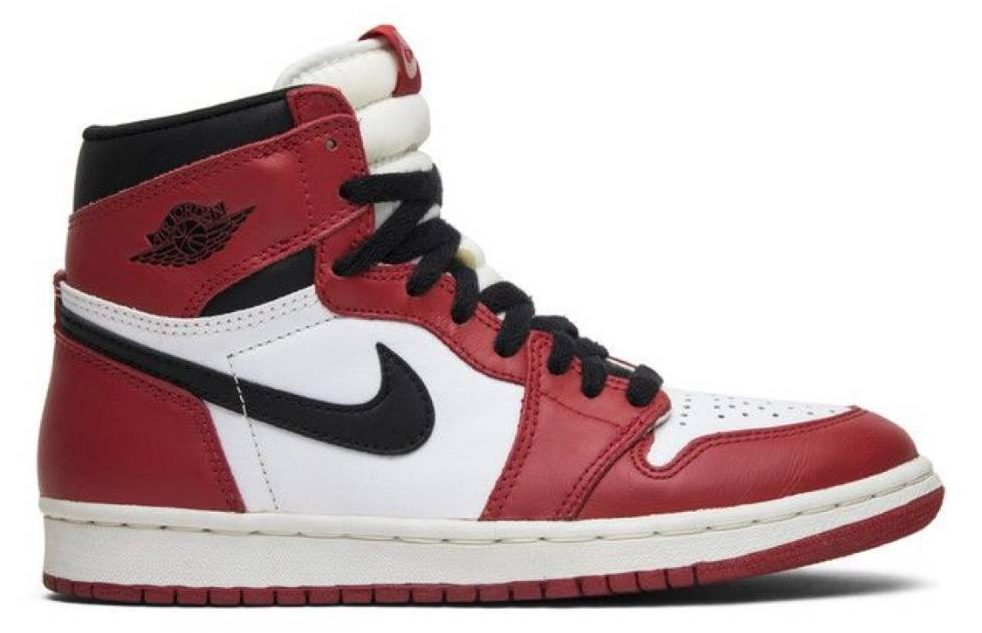
The top of the market exists but is genuinely thin — a Jordan 1 Retro High Dior at AED 30,000, a Jordan 1 Chicago (1994) at AED 16,530, a Nike SB Dunk Low Grateful Dead Bears at AED 11,000. Fifteen listings in the entire catalogue sit above AED 5,000.
One caveat throughout: these are asks, not confirmed sale prices. An ask is what a seller wants. Treat the medians as the shape of the market and the top of a negotiating range, not as clearing prices.
Buying locally versus importing
The decision people get wrong, almost always in the same way: they compare a foreign sticker price to a local delivered price.
What an import actually costs
Four layers stack onto any cross-border order:
- The ask — the number you saw.
- Platform fees. StockX, for one, does not publish a fixed buyer processing fee. Its own help pages describe fees as determined by item price, both parties’ locations, and supply and demand. You cannot precompute it; you can only see it at checkout.
- International shipping, also calculated per order.
- Duty and tax. Above the AED 300 per-consignment threshold — lowered from roughly AED 970 under Dubai Customs Notice 05/2022, effective 1 January 2023 — expect 5% duty on the CIF value, then 5% VAT on the duty-inclusive total. Because the VAT applies after the duty, it works out at about 10.25%, not 10%.
Then your bank’s FX markup, on top of the dirham’s fixed 3.6725 peg to the dollar.
→ The full landed-cost breakdown, with a worked example
The rule of thumb
- Under about AED 1,000 — importing rarely makes sense. Fixed costs are too large a share of the total, and this is the band where six in ten local listings sit.
- AED 1,000 to AED 2,000 — depends entirely on the price gap and whether the pair exists locally in your size.
- Above AED 2,000 — worth running the full comparison every time. Absolute savings can be large enough to justify the friction.
When importing wins anyway
Depth. A catalogue of 1,102 pairs cannot cover what a global market does. If the specific colourway isn’t here, price comparison is academic.
Size availability. Availability is per-size, not per-model. A pair listed locally may not be listed in your size, and that’s the constraint that sends most people abroad.
Sizing, and why it matters more when you import
A sizing mistake made locally is an inconvenience. Made cross-border it’s expensive: you ship the shoe back internationally, and the duty you paid is not automatically refunded — reclaiming it is a separate process most buyers never bother with.
So get it right before you commit:
- Check model-specific fit advice, not brand-level advice. Fit varies more within a brand than people expect. Kobes, for example, run narrow across the line — the 6 and 8 notably snug, the 5 generally considered the truest fit.
- Try the silhouette on if you can, even in a different colourway.
- Where fit is uncertain, buy locally. The return path is short and cheap.
→ Kobe Protro pricing and sizing in the UAE
Authenticating a pair
Most stock in this market arrives through cross-border and grey channels rather than an official distributor, and most resale transactions are private. The practical consequence is that the buyer is usually the only person checking.
Start with the check that costs nothing: the style code. Every Nike and Jordan pair carries a nine-character code — six digits, hyphen, three digits. It must appear on the box label and on the tag inside the shoe, the two must match, and it must resolve to the colourway in front of you. Mismatches are decisive, and they’re common, because counterfeiters print labels separately from shoes.
After that: box construction and label print quality, tongue-tag typography and alignment, stitching uniformity around the Swoosh, silhouette against reference photographs, materials and smell, insole print sharpness, and model-specific tells.
The honest limit: none of this reliably catches “unauthorised authentic” pairs, high-end replicas built specifically to defeat these checks, or Frankenstein pairs assembled from real components. For expensive pairs, verify the source rather than only the shoe.
→ The full sneaker legit check stack
Where the money leaks
Five recurring, avoidable losses.
Comparing sticker to delivered. The most expensive habit in this market, and the easiest to fix.
Ignoring FX markup. A fixed drag on every foreign-currency order. Most buyers have never checked what their bank charges.
Buying private to save a margin on an expensive pair. The saving is real and so is the risk. On a AED 500 pair that trade-off is defensible. On a AED 3,000 pair it usually isn’t.
Under-declaring value on an import. It’s a customs offence, and it caps your insurance if the parcel goes missing. Both halves of that matter.
Assuming every pair carries triple retail. The typical premium is about 1.6× US retail, and one in eight live asks is below it. Check the local band before you accept a price — and name your own if the ask looks high.
Selling into this market
If you’re on the other side, the same data reads differently.
Sellers outnumber buyers at any given moment — 643 live asks is a lot of supply — so pricing is competitive and patience is expensive. Look at where comparable pairs actually sit in the band rather than at what you paid.
Condition and completeness carry disproportionate weight in a market where most listings are ordinary retros. Original box, all accessories, honest photographs of wear. When the pairs are broadly similar, presentation is the differentiator.
And be realistic about the tail. Fifteen listings in the whole catalogue are above AED 5,000. If you’re holding something genuinely rare, the local market may be too thin to price it well, and cross-border may be the better venue despite the friction.
Questions people actually ask
Are sneakers expensive in Dubai? Moderately. The median live ask locally is AED 899, about 1.6× US retail, and 59% of listings with a live ask are under AED 1,000.
Is it cheaper to buy sneakers from StockX or locally? On mainstream retros, often locally once you count fees, shipping, roughly 10.25% duty and VAT, and FX markup. On rare pairs unavailable here, importing is frequently the only option.
Do I pay customs on sneakers shipped to the UAE? Above AED 300 per consignment: 5% duty on CIF, then 5% VAT on the duty-inclusive total.
How do I know a pair is real? Start with the style code on the box and the shoe tag — they must match each other and the colourway. Then work through the box, tag, stitching, shape and materials.
What’s the most common sneaker in the UAE market? Jordan and Nike dominate by listing volume, together making up roughly two-thirds of the local catalogue.
Can I return sneakers bought abroad? Usually, but at your cost, and the duty you paid isn’t automatically refunded. This is the strongest argument for buying locally when your size is uncertain.
These figures are a single day’s snapshot of a market that reprices constantly, and asks move faster than sales — read them as the shape of the market rather than a price list. The discipline is what lasts: compare delivered totals, check the style code before you check anything else, and let the local price band tell you whether an offer is good before you decide you want it.
Sources: buyer fees and international shipping via StockX Help; UAE customs threshold via EY on Dubai Customs Notice 05/2022 and Gulf News; Protro fit context via Nike; dirham peg via the Central Bank of the UAE; listing data from the House of Stox catalogue, 27 August 2026.
Buy and sell authenticated, in the UAE
Every item verified before it ships. Fast delivery across the Emirates.