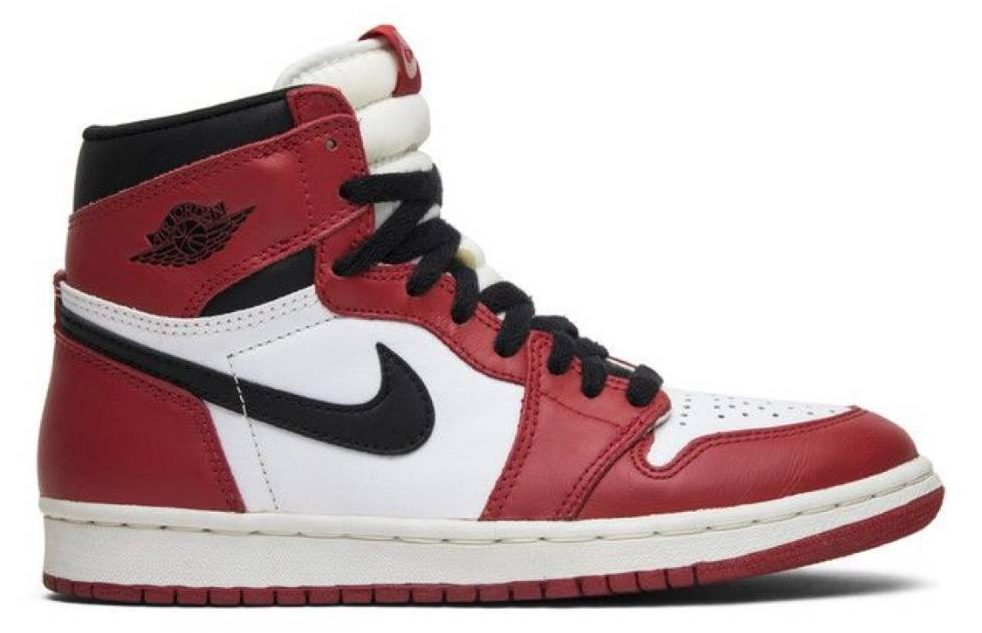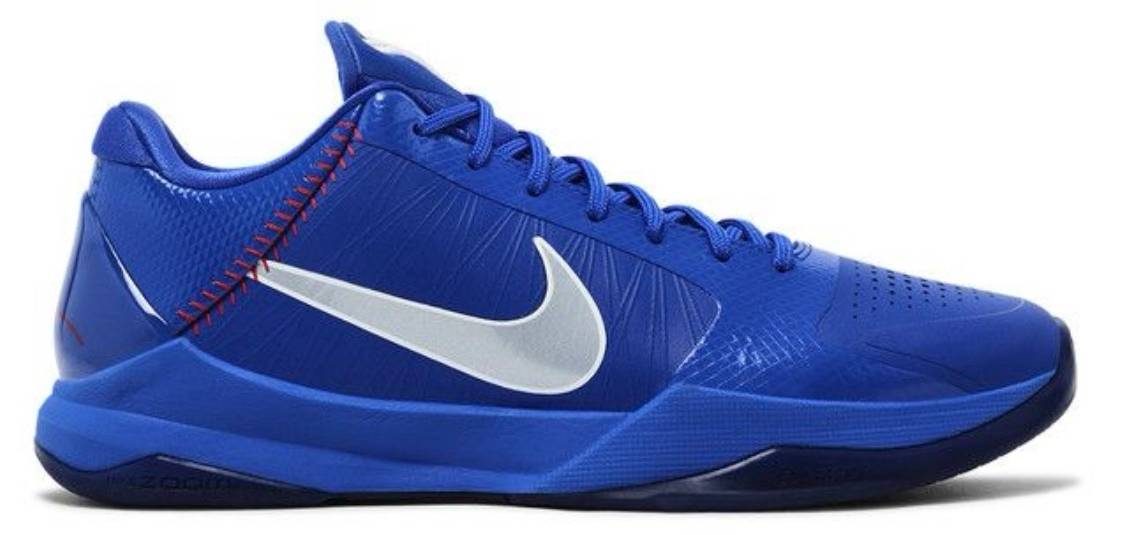
What a StockX order actually costs in the UAE
The price on the tile is not the price you pay. Every fee that stacks onto a cross-border sneaker order into Dubai, and the local comparison.
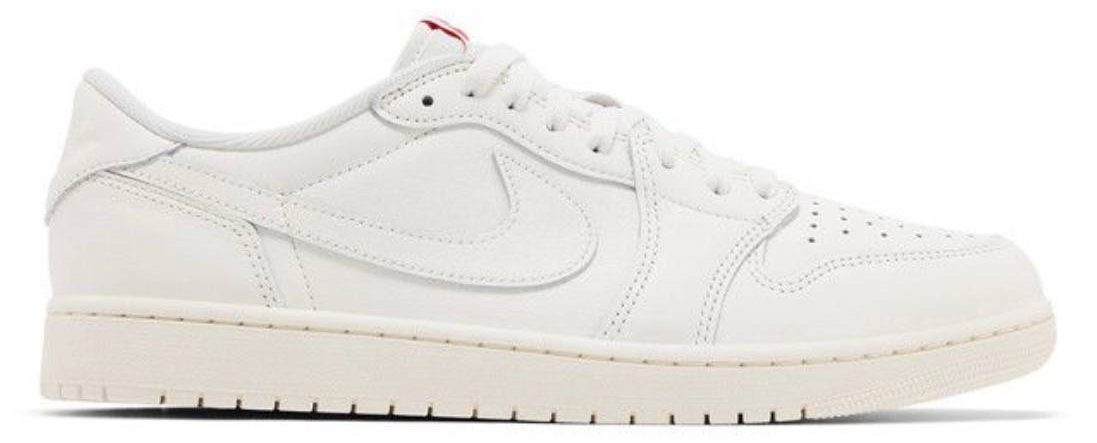
You find the pair. The tile says $180. You do the mental conversion — roughly AED 660 — and it feels reasonable.
Then you reach checkout and the number has moved. Sometimes by a little. Sometimes by a third.
Nothing dishonest has happened. Cross-border sneaker buying has four separate cost layers, and only one of them is the price you saw. This piece breaks down all four, explains why nobody can quote you an exact figure in advance, and puts the result next to what the same category costs locally in AED.
For the wider picture on prices, sizing and authentication here, see our complete guide to buying sneakers in the UAE.
The four layers
1. The ask. What a seller is asking. This is the number on the tile.
2. The processing fee. StockX charges buyers a processing fee, and it is not a fixed percentage. In StockX’s own description, fees are “determined based on the price of the item, location of the Seller and Buyer, and supply and demand.” Two people buying the same shoe on the same day can pay different fees.
3. Shipping. Also variable, calculated per order. StockX says buyers always see the full shipping cost before completing a purchase — which is the important part: you can see it, but only by getting to checkout.
4. Import duties and tax. Calculated from your destination address. For some countries StockX ships DDP — Delivered Duties Paid — where duty and VAT are added at checkout and shown as “Import Duties,” and nothing further is collected on delivery. Where DDP doesn’t apply, the courier collects from you before they hand the box over.
That last distinction is the one that catches people. Both routes cost roughly the same in total; only one of them tells you in advance.
Why you can’t precompute it
This is worth stating plainly because a lot of content pretends otherwise: StockX does not publish a fixed buyer fee percentage. Its help pages describe the inputs — item price, both parties’ locations, supply and demand — without publishing the formula.
So any article giving you “StockX charges X%” is guessing. The only reliable method is to put the item in the cart, enter your UAE address, and read the total before you confirm. That’s not a workaround; it’s the intended flow.
What you can do in advance is know the customs baseline, so you can tell whether a checkout total looks right.
The UAE customs baseline
If duties are not prepaid, this is what applies on arrival:
- Threshold: AED 300 per consignment. Dubai Customs lowered it from roughly AED 970 under Customs Notice 05/2022, effective 1 January 2023. Below it, personal shipments generally clear without duty.
- 5% customs duty on the CIF value — the cost of the goods plus insurance plus freight. Note that shipping is inside the taxable base, not outside it.
- 5% VAT, calculated on the duty-inclusive total. So it’s applied to CIF plus the duty, not to CIF alone.
The compounding is small but real. On an AED 1,000 CIF value: AED 50 duty, then VAT on AED 1,050 = AED 52.50. Total AED 102.50, or about 10.25% — slightly more than the “5 plus 5” you’d expect.
Add courier handling and customs clearance charges, which are separate again and vary by carrier.
The currency layer nobody budgets for
The dirham is pegged to the US dollar at 3.6725, and the Central Bank of the UAE has held it there since 1997. The conversion itself is stable and predictable.
Your bank’s is not. A USD charge on an AED card picks up whatever foreign-transaction markup your issuer applies, on top of the peg. Check what yours charges — it’s a fixed drag on every cross-border order you place, and it’s the layer people most often forget entirely.
A worked example
Stated assumptions, because several inputs genuinely vary:
| Line | Amount |
|---|---|
| Ask | $180 (≈ AED 661 at the peg) |
| Processing fee | variable — visible only at checkout |
| International shipping | variable — visible only at checkout |
| Duty + VAT if not prepaid | ~10.25% of CIF |
| Bank FX markup | your issuer’s rate |
| Landed cost | meaningfully above AED 661 |
The honest output of this exercise isn’t a number. It’s a habit: stop comparing the tile price to a local price. Compare the checkout total, delivered to the local price. That’s the only comparison that means anything, and it’s the one most buyers never actually run.
What the same money buys locally
Here’s the local side, so the comparison is concrete. Across the House of Stox sneaker catalogue on 27 August 2026:
- 1,102 pairs listed, of which 643 carried a live seller-set ask in AED.
- Asks ran AED 187 to AED 30,000, with a median of AED 899 — about 1.6× US retail at the peg.
- 13% of live asks were under AED 500. 46% sat between AED 500 and AED 999.
- 41% were above AED 1,000; 8% above AED 2,000.
- By volume: Jordan (369), Nike (343), Adidas (163), Nike SB (61), ASICS (32).
That distribution is the useful finding. Six in ten pairs with a live ask are under AED 1,000, and nine in ten are under AED 2,000. This is not a market of grails and hype tax — it’s mostly mainstream retros and general releases at a moderate premium, priced in the currency you already hold, with no customs step and no wait.
For specific models: Kobe listings ran AED 600–7,950 with a median of AED 1,270; Dunks AED 350–11,000, median AED 699; Yeezys AED 400–6,000, median AED 925.
When cross-border still wins
Buying abroad is the right call more often than local-first advocates admit:
- The pair doesn’t exist here. Depth is the real constraint. A local market of 1,102 listings cannot cover what a global one does, and the specific colourway you want may simply not be listed.
- Your size isn’t available. Availability is per-size, not per-model. A pair “in stock” locally may not be in stock in your size.
- The price gap exceeds the friction. On genuinely expensive pairs, a large enough discount clears roughly 10% duty and VAT plus shipping plus FX markup. On a AED 300 shoe it almost never does.
When local wins
- The pair is here at a comparable price. Once you’ve compared landed costs rather than sticker prices, the local number often wins on ordinary retros.
- You need it soon. Domestic delivery versus international shipping and customs clearance is not a close race.
- Returns and sizing matter. This is the underrated one. A cross-border return means shipping the shoe back internationally, and the duty you paid is not automatically refunded — reclaiming it is a separate process most buyers never bother with. A sizing mistake made locally is an inconvenience. Made cross-border, it’s expensive.
- You want the authentication to be somebody’s responsibility. Legit-checking a pair yourself is a skill worth having, but it isn’t a substitute for a verification step.
The rule of thumb
Under about AED 500, cross-border rarely makes sense — the fixed costs are too large a share. Between AED 500 and AED 1,500, it depends entirely on the price gap and whether the pair is available locally in your size. Above that, it’s worth running the full comparison every time, because the absolute savings can be large enough to justify the friction.
And always run it on the delivered total. That’s the whole discipline.
Questions people actually ask
Does StockX ship to the UAE? Yes, StockX ships internationally. Fees, duties and delivery times are calculated from your address at checkout.
Will I pay customs on delivery? Depends on whether the order ships DDP. If duties are collected at checkout and shown as “Import Duties,” you shouldn’t pay again on delivery. If not, the courier collects before handing over.
What is the UAE duty on shoes? The standard rate is 5% of CIF value, plus 5% VAT on the duty-inclusive total, on consignments above AED 300.
Is StockX cheaper than buying in Dubai? Sometimes. On mainstream retros — where the local median ask is AED 899, about 1.6× US retail — the gap narrows sharply once StockX fees, shipping, duty, VAT and FX are counted, and the local pair arrives faster with the authentication done here. On rare pairs unavailable locally, frequently yes.
Can I avoid duty by asking for a lower declared value? No. Under-declaring is a customs offence, and it also caps your insurance if the parcel goes missing.
Prices, fees and thresholds all move — StockX’s fees are dynamic by design, courier rates are quoted fresh, and customs rules change by notice. Verify at checkout and against the current tariff before you commit. The method survives the numbers: count all four layers, compare delivered totals rather than sticker prices, and be honest about what the friction is worth to you.
Sources: buyer fees, shipping and DDP handling via StockX Help; UAE customs threshold via EY on Dubai Customs Notice 05/2022 and Gulf News; dirham peg via the Central Bank of the UAE; listing data from the House of Stox catalogue, 27 August 2026.
Buy and sell authenticated, in the UAE
Every item verified before it ships. Fast delivery across the Emirates.