Sneaker legit check: how to authenticate a pair before you pay
Eight checks that catch most fake sneakers, in the order a professional runs them — and the category no visual inspection reliably catches.
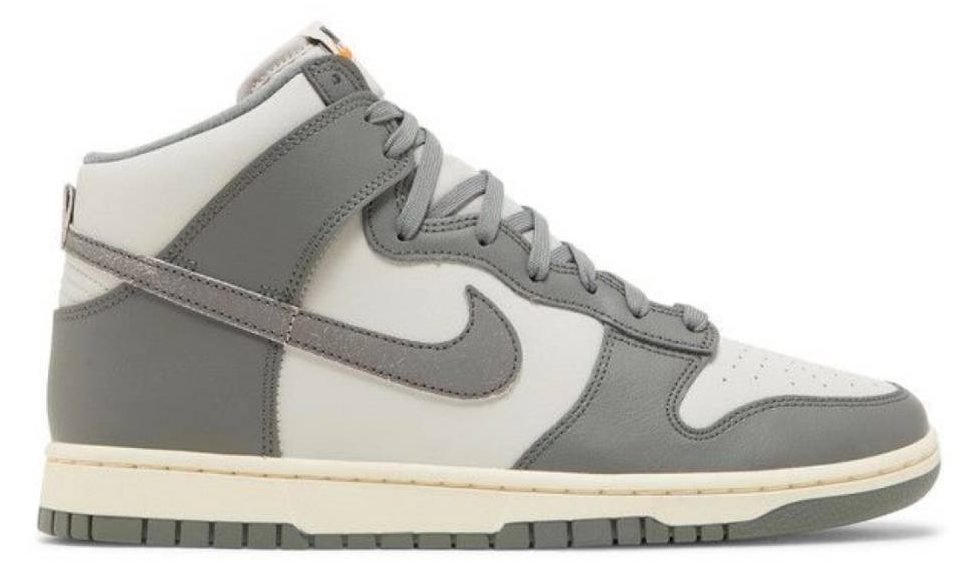
The single most useful thing to understand about legit-checking is that no individual detail proves a pair is real. Replicas have improved to the point where any one feature can be reproduced convincingly. What counterfeiters struggle to do is get everything right at once, on a shoe built to a price, at volume.
So authentication is not a hunt for one smoking gun. It’s a stack of checks where a failure anywhere ends the conversation and passing everything only means “no reason to doubt it yet.”
Here’s the stack, roughly in the order a professional runs it — cheapest and most decisive first.
For prices, sizing and import costs here, see our complete guide to buying sneakers in the UAE.
Why this matters more in the UAE
A lot of sneaker stock reaches this market through cross-border and grey channels rather than through an official distributor. Combine that with a resale market where most transactions are private, and the practical result is that the buyer is usually the only person checking.
That’s the gap these checks fill. It’s also the reason the last section of this piece matters as much as the first.
1. The style code — start here
Every Nike and Jordan pair carries a nine-character style code, formatted as six digits, a hyphen, then three digits — for example 555088-061 for the Jordan 1 High OG “Black Toe.”
Three things must line up:
- The code on the box label
- The code on the tag inside the shoe
- The colourway that code actually corresponds to when you look it up
A mismatch between box and shoe is decisive — that’s a fake or a mismatched pairing. A code that returns nothing, or returns a different colourway than the shoe in front of you, is equally decisive. Counterfeiters copy codes onto the wrong shoes constantly, because they print labels separately from the pairs.
This check costs nothing, takes thirty seconds, and eliminates a large share of fakes before you’ve touched the shoe.
2. The box
Real boxes are made properly. Rigid, clean edges, no flex when you hold a corner. A flimsy box that bows under its own weight is a bad opening signal.
Then read the label itself. Check the colourway name against Nike’s official naming — exactly, not approximately. Check the size conversions across US, UK, EU and CM for internal consistency. Check the print quality: real labels are crisply printed, and fakes routinely show slightly fuzzy text or wrong font weight.
A caveat that cuts both ways: boxes get swapped. A wrong box on a real shoe is common in resale. A perfect box around a fake shoe is also common. The box is evidence, not a verdict.
3. The tongue and size tag
This is where fakes fail most often, because it’s dense with small typography.
- The interior label carries multiple lines of text, and misalignment between those lines is one of the most reliable tells. Real labels are set precisely; fakes drift.
- Font weight and letter spacing should match the era of the shoe.
- On a real Jordan 1, the tag is sewn down on the inside of the tongue rather than welded or glued.
- The stitching attaching the tag should be neat and even.
Photograph this area under good light and zoom in. Detail that looks fine to the naked eye often falls apart at magnification.
4. Stitching
Look at the whole shoe, then look specifically at the Swoosh outline.
Real stitching is uniform: consistent stitch length, consistent thread thickness, consistent spacing, no wandering line. The thread colour should match the panel it’s sewn to.
Fakes give themselves away with uneven stitch length, thread that’s noticeably thick or thin, loose ends, and stitching that bleeds past the edge it’s supposed to follow. The Swoosh outline is the highest-value place to look because it’s a long curved line — the hardest kind to sew consistently at low cost.
5. Shape and silhouette
The check that catches the best fakes, and the one that takes the most experience.
Factories replicate details more easily than they replicate a last — the mould the shoe is built around. Fakes are frequently subtly wrong in ways that are hard to name but easy to see once you know the model: a toe box that’s too bulbous or too flat, a heel that curves wrong, an ankle collar at the wrong height, a midsole with the wrong taper.
Put the pair next to reference photographs of a confirmed-real pair in the same colourway, from the same angles. Side by side, silhouette errors that are invisible in isolation become obvious.
This is why handling real pairs matters. You can’t shortcut it, and it’s the check most worth developing.
6. Materials, smell and weight
Materials. Real leather creases and behaves differently from cheap synthetic. Suede should have a consistent nap. Check panels against each other for consistent texture and colour.
Smell. Strong chemical or glue odour is a genuine warning sign. Real pairs smell of leather and rubber. Fakes often smell of solvent, because of the adhesives used.
Weight. Counterfeits frequently come out lighter, using less material and cheaper foam. This only helps if you’ve held a real pair of the same model.
Glue. Look along the midsole join for excess glue, yellowing residue or visible seepage. Clean assembly is expensive; sloppy assembly is the point of a fake.
7. Insole and under-insole
The insole print should be sharp — crisp edges on the Jumpman or Swoosh, correct positioning, no pixelation or ink bleed. Fakes commonly show a slightly soft or faded logo, or one placed marginally off.
Lift the insole. Real pairs typically have factory markings underneath. What’s there varies by model and era, so this check requires a reference — but a blank or visibly wrong underfoot is a flag.
8. Model-specific details
Every silhouette has its own tells, and the fakes track them:
- Jordan 1 — the “AIR” on the heel tab uses a specific condensed font with even letter spacing. Fakes show uneven kerning or a slightly wrong weight. The Wings logo should be cleanly embossed with sharp lines.
- Dunks — panel proportions and Swoosh shape are the usual failure points.
- Yeezys — the knit pattern, stitch density and the specific translucency of the sole.
Before checking a specific pair, find a current guide for that exact model and colourway. Generic advice takes you most of the way; the last stretch is model-specific.
What none of this reliably catches
This is the part most guides leave out, and it’s the part that matters when real money is involved.
“Unauthorised authentic” pairs. Shoes produced in the same factories, on the same tooling, outside the official production run. Whatever you think of the category, the practical point is that visual inspection is a weak tool against them.
High-end replicas built specifically to defeat these checks. They exist, they’re expensive to make, and they’re aimed at exactly the pairs where you have the most to lose.
Frankenstein pairs. Real components combined from multiple shoes, or a real pair with a replaced sole or swapped insole. Every individual part checks out.
Worn pairs. Use obscures nearly everything above — creasing, stitching wear, faded prints, lost smell. Legit-checking used sneakers is materially harder than checking deadstock.
The conclusion follows directly: for high-value pairs, verify the source, not just the shoe. Card-level checks tell you about the object. They tell you nothing about the transaction.
Practical rules for buying here
- Demand real photographs. Box label, tongue tag, insole, stitching around the Swoosh, and both shoes side by side. Not stock images. A seller who won’t provide them has answered your question.
- Cross-check the style code before you meet. It’s free, it’s fast, and it ends a meaningful fraction of conversations early.
- Be sceptical of a price well below market. Local asks are a useful sanity check: across the House of Stox sneaker catalogue on 27 August 2026, 643 pairs carried a live AED ask, with a median of AED 899 — about 1.6× US retail — and 92% under AED 2,000. A hyped pair offered far below that band deserves scrutiny, not enthusiasm.
- Prefer verified over private for anything expensive. A marketplace that authenticates before the shoe reaches you moves the risk off your shoulders. That’s the entire value of the step.
- If you buy cross-border, count the real cost. Duties, shipping and FX stack up, and a return is expensive. Here’s the full landed-cost breakdown.
Questions people actually ask
Can an app legit check my sneakers from photos? Photo-based services are a reasonable first filter and are genuinely useful for obvious fakes. They can’t assess weight, smell, materials or shape properly, so treat a pass as encouraging rather than conclusive.
Is the style code check enough on its own? No, but it’s the highest-value single check. It’s free, fast, and it catches the mismatches that make up a large share of fakes.
Do fake sneakers come with real boxes? Sometimes. Boxes are separable from shoes and both get swapped, in both directions. Never let the box alone decide.
What’s the most reliable check overall? Shape, if you know the model well. It’s the hardest thing to fake and the hardest to learn.
Should I buy used sneakers online? It’s much harder to authenticate a worn pair, so buy used from sellers who are accountable — with a returns process, a verification step, or a reputation they’d lose.
Counterfeits improve continuously, and specific tells go out of date as factories correct them. Check a current model-specific guide alongside this one, and treat any single detail as evidence rather than proof. Run the whole stack, weight the price and the seller heavily, and when the number gets high enough that being wrong would genuinely hurt, buy something that’s already been verified.
Buy and sell authenticated, in the UAE
Every item verified before it ships. Fast delivery across the Emirates.