The most valuable Pokémon cards — and what that means for the ones you own
A Pikachu Illustrator sold for $16.49m in February 2026. The verified records, why they command those prices, and which cards you might own.
On 16 February 2026, a Pikachu Illustrator graded PSA Gem Mint 10 sold through Goldin Auctions for $16,492,000. Logan Paul, who had bought the same card privately for $5,275,000 in 2021, handed it over on a livestream. Guinness World Records recognises it as the most expensive Pokémon trading card ever sold at auction.
That number is where most articles on this subject start and stop. It’s also almost entirely useless if what you actually want to know is whether the cards in your cupboard are worth anything.
So this piece does both. The verified records first, because they’re genuinely interesting and they explain how value works in this hobby. Then the part that applies to you.
For the local picture — what actually trades in the UAE and at what price — see our complete guide to trading cards in the UAE.
The verified records
Only sales documented by a major auction house or record body are listed here. A great deal of what circulates online as “most expensive Pokémon cards” is unverified.
| Card | Grade | Price | Sale |
|---|---|---|---|
| Pikachu Illustrator (1998) | PSA 10 | $16,492,000 | Goldin, 16 Feb 2026 |
| Pikachu Illustrator (1998) | PSA 10 | $5,275,000 | Private sale, 2021 |
| Test Print Blastoise, gold border, MTG back (1998) | CGC 6.5 | $216,000 | Heritage |
| 1st Edition Base Set Charizard, holo | PSA 10 | $420,000 | 2022 |
| Tropical Mega Battle Bilingual Exeggutor (1999) | — | $59,780 | Goldin, July 2024 |
| Kangaskhan Parent/Child tournament prize | — | $30,700 | Goldin, 2024 |
Why those cards, and not others
Look at what the top of that table has in common, because the pattern is consistent and it’s the thing worth learning.
They were never sold. The Pikachu Illustrator was a prize in a 1998 illustration contest run by the manga magazine CoroCoro, designed by Atsuko Nishida — Pikachu’s original designer. It was never a retail product. Roughly 39 went to contest winners, with a couple more surfacing later; around 41 exist in total. The Tropical Mega Battle Exeggutor was a participation prize at a 1999 tournament in Hawaii, with somewhere between 36 and 50 printed. The Kangaskhan was a Parent/Child tournament prize.
They are one-of-a-kind in grade. The $16.49M Pikachu is the only known copy graded PSA 10. Not the rarest card by print run — the rarest in that condition. That distinction is where most of the money sits.
They are artefacts of the game’s history. The Test Print Blastoise, printed with a gold border on a Magic: The Gathering card back, is one of the first attempts by Wizards of the Coast to produce English Pokémon cards. Six have been authenticated by CGC. It sold for $216,000 in a grade of 6.5 — a mid grade, on a card most collectors would consider visually unremarkable. Provenance carried it.
None of these are cards anyone pulled from a pack.
The honest part: your cards are almost certainly not these
If your collection came from packs bought in a shop, the ceiling is set by what was mass-produced. That’s not a reason to stop reading — plenty of pack-pulled cards are worth real money. It’s a reason to look in the right place.
Here’s where realistically-ownable value actually lives.
1st Edition and Shadowless Base Set (1999)
The genuinely valuable vintage tier. Look for the 1st Edition stamp — a small black circle with “EDITION 1” — to the left of the artwork.
Shadowless cards are the harder concept and the more commonly missed one. Very early Base Set printings lack the drop shadow on the right edge of the artwork frame that later printings have. Put a shadowless next to an unlimited card and it’s obvious; alone, it’s easy to miss entirely. Shadowless cards carry a substantial premium over unlimited.
Condition dominates here. A played 1st Edition Charizard and a gem mint one are separated by orders of magnitude.
WOTC-era holos generally (1999–2003)
Base Set, Jungle, Fossil, Team Rocket, Neo, and the rest. Holos from this period in high grade have appreciated persistently. Charizard leads, but Blastoise, Venusaur, Lugia, Umbreon and Espeon all carry weight.
The catch: cards from this era were played with, by children, in 1999. Most surviving copies are not close to mint. That’s exactly why the mint ones are worth what they are.
Gold Star cards (2004–2007)
A short-lived rarity marked by a gold star beside the Pokémon’s name, with distinctive full-body holographic artwork. Genuinely scarce, consistently valuable, and frequently faked.
Modern chase cards
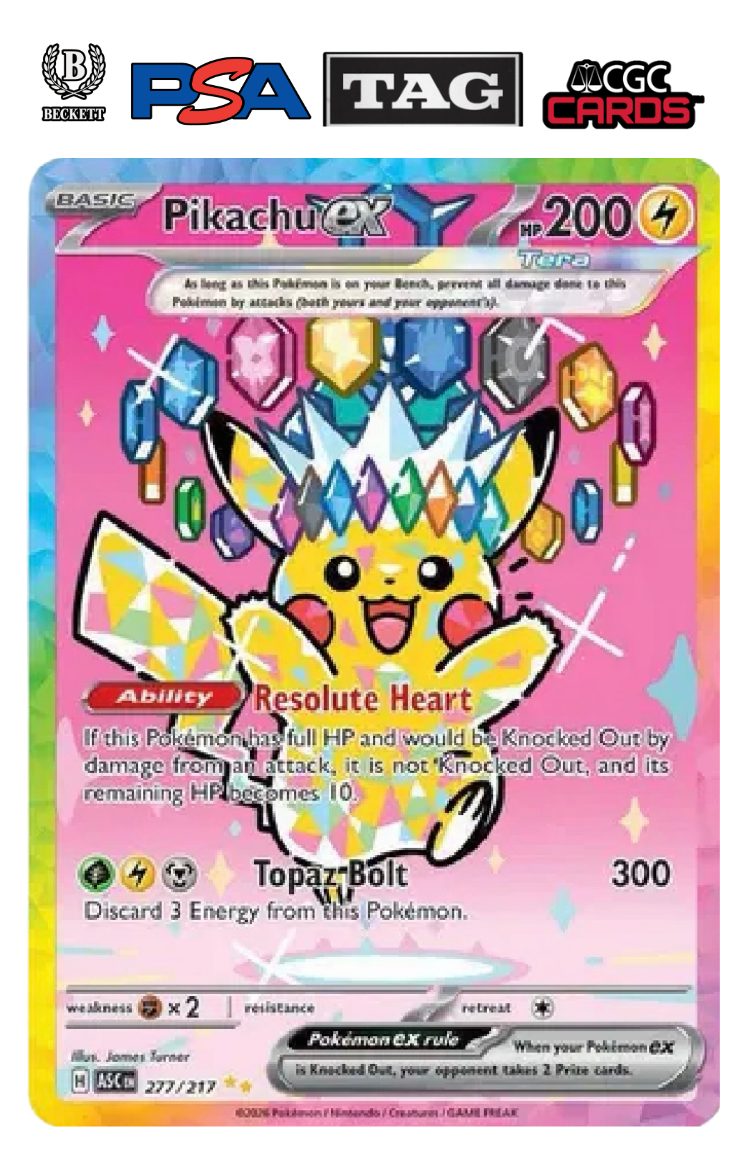
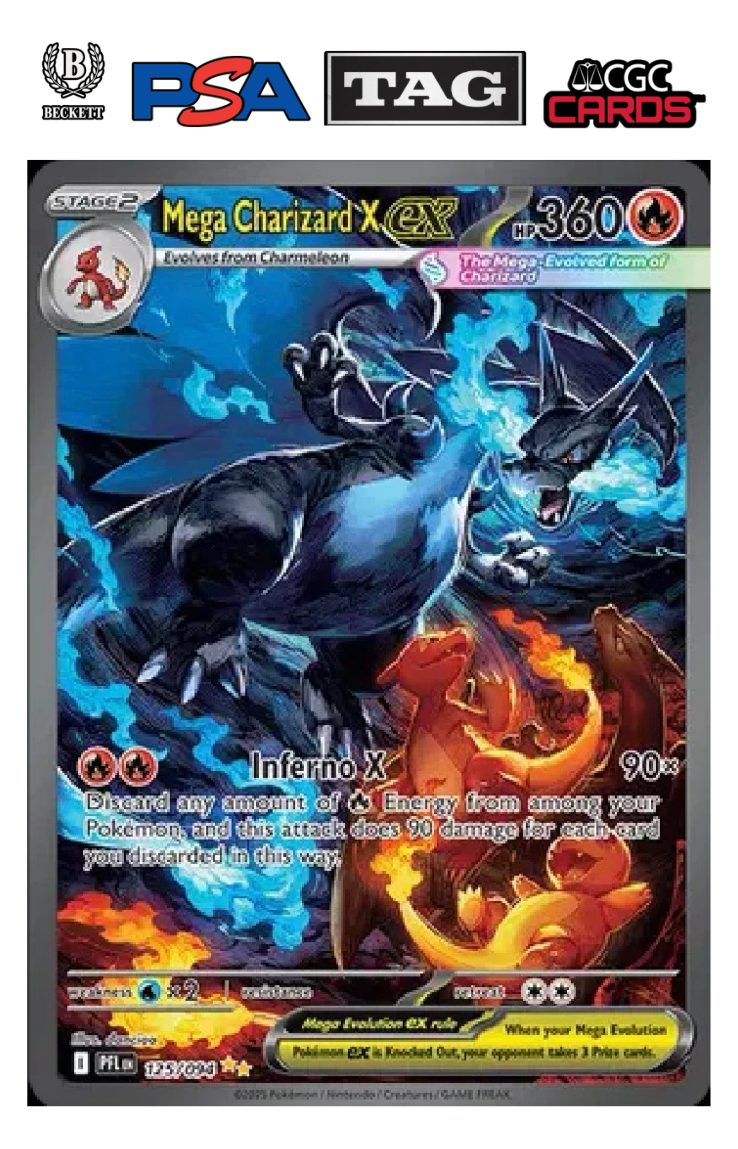
Contemporary sets produce their own high-value cards, and this is the category most likely to apply to a collection assembled recently. Look for Special Illustration Rares, Illustration Rares and Hyper Rares — identifiable by the gold star symbols in the lower-right corner.
Modern chase cards behave differently from vintage. Print runs are enormous, so value depends heavily on character and on grade. A Special Illustration Rare of a beloved Pokémon in a PSA 10 can be worth serious money; the same card at PSA 8 often isn’t.
Errors and misprints
Genuine printing errors — inverted text, missing ink layers, miscuts — can be valuable when documented and verifiable. This category is also where fakes concentrate, because “error” is a convenient explanation for anything that looks wrong. Treat unverified error claims with suspicion.
Japanese promos and exclusives
Japan received a long tail of promotional cards that never had English printings. Some are scarce and valuable. They price against Japanese sales, not English ones.
How to check what you actually have
Three steps, in order.
Identify it exactly. Set, collector number, rarity symbol, language, edition stamp. A one-digit difference in the collector number can be a 50× difference in price. Our valuation guide covers reading the bottom of the card properly.
Price it off sold results at its real grade. Not the headline PSA 10 number. PSA’s free Auction Prices Realized database shows what each grade sold for, alongside how many exist at that grade.
Verify it’s genuine before you get excited. Every card in the valuable tiers above is counterfeited, and the more valuable the card, the better the fake. Our eight checks for spotting a fake is the place to start.
What “valuable” means from the UAE specifically
A US sold price is not what a card is worth to you here, in either direction.
If you’re buying, the dirham is pegged at 3.6725 to the dollar, but the landed cost adds shipping, then 5% duty on the CIF value above the AED 300 threshold, then 5% VAT on the duty-inclusive total.
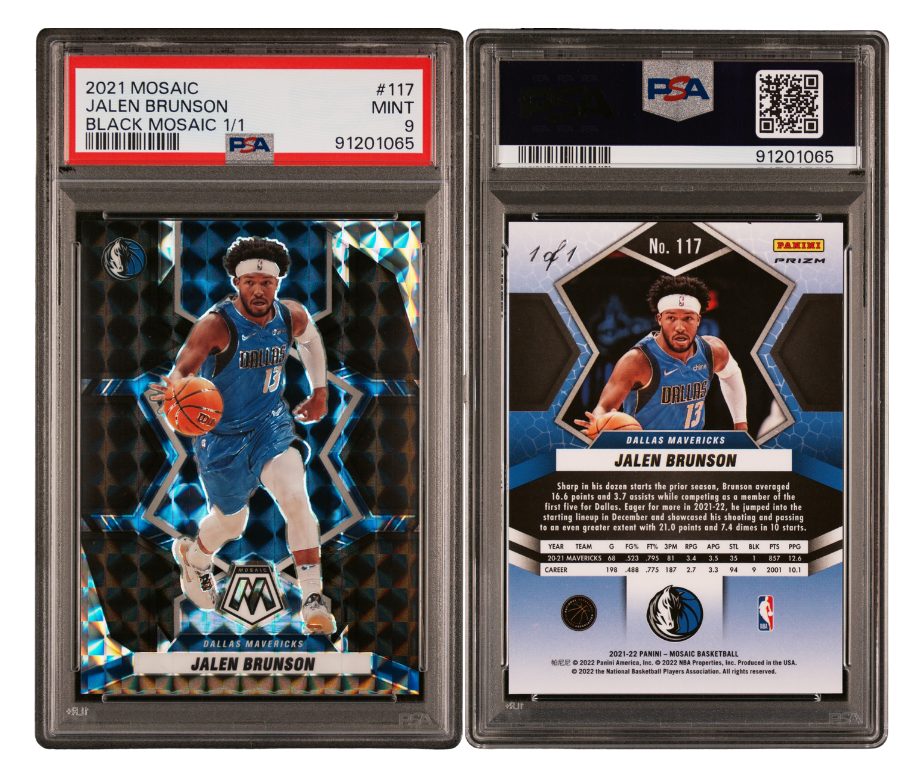
If you’re selling, a slab is worth disproportionately more here than the US premium suggests, because the local market is overwhelmingly raw. Across the House of Stox catalogue on 27 August 2026 there was exactly one PSA-graded card listed — and it was a basketball card. In a market where nothing is slabbed, a slab does work that no photograph can.
If you’re grading, the maths is harsh. There’s no facility in the country, PSA’s cheapest tiers have been paused since 2 June 2026 against a backlog of 11.85 million units as of 11 August, and a single-card submission from Dubai runs north of AED 600 all-in. The full breakdown is here. Grade high-value cards, or grade in batches, or don’t grade.
For local context on what actually trades: of 167 Pokémon products listed on House of Stox, 87 carried a live AED ask, with sealed product running AED 75 to AED 7,500 at a median of AED 450. This is a modern, sealed-led market. Vintage chase cards are not what changes hands here in volume.
Questions people actually ask
What is the most expensive Pokémon card ever sold? A 1998 Pikachu Illustrator graded PSA 10, sold for $16,492,000 through Goldin Auctions on 16 February 2026 — the only known copy at that grade.
Is my 1st Edition Charizard worth $420,000? Only if it’s a PSA 10, which is extraordinarily rare. That record was set by a gem mint copy. A played 1st Edition Charizard is worth a small fraction of it — still a meaningful sum, but a different universe.
Are modern cards ever worth as much as vintage? Not at the top end. Print runs are vastly larger. Modern Special Illustration Rares can still reach four and occasionally five figures in top grade.
How do I know if my Base Set card is shadowless? Compare it to a known unlimited print. Shadowless cards lack the drop shadow along the right edge of the artwork frame. Side by side it’s clear; alone it’s easy to miss.
Does a card need to be graded to be valuable? No, but grading is what converts “probably mint” into a price. On high-value cards the market pays for certainty, not for your assessment of the corners.
The records move — this one moved by more than $11 million in five years — and the tier below them moves faster. Treat every figure here as a dated snapshot rather than a valuation. The structure underneath is what lasts: scarcity that was never for sale, condition that survived when almost none did, and a story someone wants to own.
Sources: record sale via Guinness World Records and The Japan Times; Test Print Blastoise, Tropical Mega Battle and Kangaskhan results via CGC; rarity symbols via Pokémon.com; UAE customs threshold via EY.
Buy and sell authenticated, in the UAE
Every item verified before it ships. Fast delivery across the Emirates.