How to spot a fake Pokémon card: eight checks that actually work
The light test, the texture test and six other checks you can run before you pay — plus an honest account of what none of them catch.
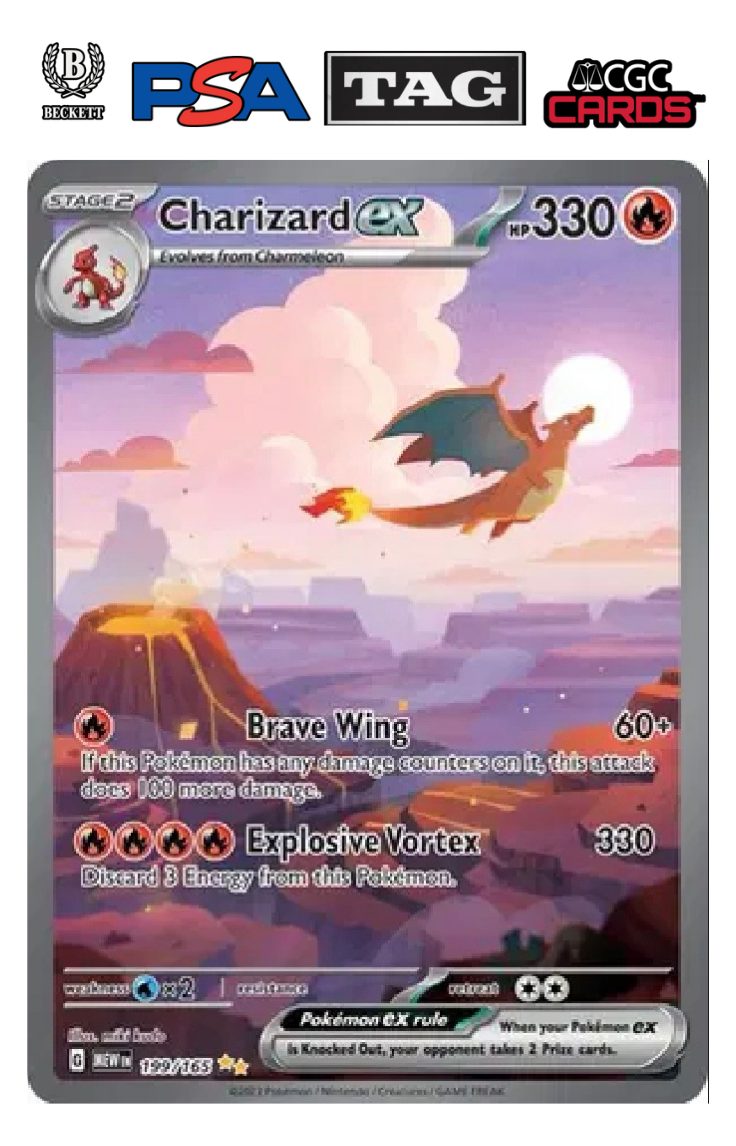
Counterfeit Pokémon cards are not a fringe problem. The Pokémon Company says so plainly: “with a product as popular as the Pokémon Trading Card Game, there are those who will counterfeit our merchandise for their own gain.”
For a buyer in the UAE, the risk sits slightly higher than it does elsewhere, for a structural reason. A lot of stock arrives here through cross-border and grey channels rather than through an official distributor, and almost everything trading locally is raw and ungraded — so there’s no slab doing the verification for you. You’re the last line of checking.
The good news is that most fakes are bad, and the checks below will catch them in under a minute. The honest news is at the end: what none of this catches.
For the wider context — what trades here, what it costs and how to sell it — see our complete guide to trading cards in the UAE.
Start with the cheapest test: the price
Official guidance from The Pokémon Company puts this first, and it’s right. A price dramatically below market is close to a guarantee. Nobody sells a genuine chase card at a fraction of what it’s worth by accident. The Pokémon Company also notes that the highest reported instances of counterfeit sales come from flea markets — informal, cash-based, no-comeback venues.
Before you evaluate the card, evaluate the deal. If you don’t know what the card should cost, work that out first. A seller offering a AED 500 card for AED 90 has told you something important before you’ve touched it.
The eight physical checks
Work down this list. Any single failure is enough to walk away.
1. The light test
Hold the card up to a bright lamp or a phone torch.
A genuine Pokémon card is built as a sandwich, with an opaque black layer at its core. That layer is why real cards barely transmit light. Hold a fake up and it typically glows — a uniform translucent wash, because it’s printed on thin single-layer stock with no black core.
One important caveat, and it’s why this can’t be your only check: counterfeiters have started adding a dark middle layer specifically to defeat this test. The light test reliably catches cheap and mid-tier fakes. It does not reliably catch the best ones.
2. The texture test
Run a fingertip across the surface. This is the check most likely to catch a fake that passed the light test, because reproducing genuine etched cardstock at scale is genuinely difficult and expensive.
Modern Illustration Rares, Special Illustration Rares and Hyper Rares carry a distinct raised texture — you can feel the pattern in the artwork. If a card that should be textured feels flat and glassy, that’s a serious problem.
You need to know what the specific card should feel like, which means handling real ones. There’s no shortcut.
3. Print quality under magnification
Put a jeweller’s loupe or a phone macro lens on the artwork.
Genuine cards show a clean, tight, regular dot pattern. Counterfeits are typically reproduced from a scan, and reprinting a printed image produces visible symptoms: fuzzy dot structure, blurred edges where colours meet, and slight misregistration where one colour plate sits fractionally off from the others. Text is where this shows worst — look at the small print of the attack descriptions, which is where sharpness collapses first.
4. Font, spacing and spelling
Counterfeiters routinely fail to reproduce typography exactly. Compare against a card you know is genuine from the same era and look at:
- Letter weight and spacing in the Pokémon’s name
- Alignment of the HP value and the energy symbols
- Any spelling or grammatical error — genuine cards are proofread
- The copyright line at the bottom, which should carry the right year and format
A card claiming to be from a set that didn’t exist in that copyright year is finished as a question.
5. The back of the card
Fakes are often given away by the back, because it’s the part people examine least.
Check the blue. Genuine backs use a consistent blue that fakes frequently render too dark, too purple or too washed out. Check the border thickness for evenness, and look at the fine detail in the central Poké Ball artwork and the swirl pattern around it — that detail is where cheap reproduction falls apart.
If you have a genuine card, put them back to back. Colour differences that are invisible alone are obvious side by side.
6. The set symbol, collector number and rarity symbol
Read the bottom of the card face: the collector number, set symbol and rarity symbol. Then check that combination actually exists in the official Pokémon TCG card database.
Counterfeiters invent cards. They produce a “1/1”, or a rarity symbol that doesn’t correspond to anything the set printed, or a collector number outside the set’s range in a way real secret rares don’t follow. A card that cannot be found in the official database is either fake or not the card the seller says it is.
7. Size, weight and edges
Genuine cards are manufactured to a consistent size and thickness. Stack the card with known-genuine ones and sight down the edge — an outlier in thickness or dimension stands out immediately.
Look at the cut edges too. Real cards have clean, square cuts. Fakes often show rough or slightly fibrous edges, and sometimes a visible white line at the edge where the core should be dark.
8. Holo pattern and foil behaviour
Tilt the card under a light source. Genuine foil has depth and moves with a specific pattern for its era and rarity. Counterfeit foil tends to be flat and mirror-like, reflecting as a single sheet rather than the layered, patterned shimmer of a real card. On full-art cards, check that the foil follows the artwork rather than sitting over it as a uniform coating.
The rip test — the one you almost never use
Tear a corner, and a genuine card shows the black core layer in cross-section.
It is definitive. It also destroys the card. Reserve it for cheap bulk you’re already certain about, or for a card so obviously fake that its value is zero. Never do it to something you might be wrong about.
What none of these checks catch
Be honest about the limits, because overconfidence is how people get caught.
Super fakes. The best current counterfeits include a black core layer and increasingly credible texture. They’re rare and expensive to produce, which means they’re aimed at high-value cards — precisely where your risk is greatest.
Altered genuine cards. Trimming a card to improve its centering, or restoring a corner, leaves a real card that passes every test above. Dimension checks catch some trimming; the rest needs experience or a grader.
Resealed packs and boxes. Sealed product can be opened, searched, stripped of hits and resealed convincingly. The cards inside are genuine, so no card-level test helps. This is a supply-chain problem, not an inspection problem.
Proxies sold as real. Some cards are printed openly as playtest proxies and only become fraud when resold as genuine.
The general point: card-level checks verify the card, not the transaction. For high-value purchases, where you buy matters as much as what you check.
Buying safely in the UAE
- Buy from someone accountable. An official retailer, an established shop, or a marketplace that verifies items before they ship. Informal cash sales are exactly the venue the Pokémon Company flags.
- Insist on real photographs. Front, back and an angled shot under natural light, of the actual card — not a stock image. A seller who won’t provide them has answered your question.
- Be sceptical of sealed vintage. Genuine sealed product from the early era is scarce and expensive. Abundant, cheap “sealed 1999 booster boxes” are the oldest scam in the hobby.
- For high-value cards, consider a graded example. A slab from a major grader settles authenticity permanently. It costs more up front, and it removes an entire category of risk. Our guide to grading from the UAE covers what that involves from here.
- Keep the evidence. Photograph what arrives before you sleeve it, and keep the listing, the messages and the receipt.
Questions people actually ask
Is the light test enough on its own? No. It catches most cheap fakes, but counterfeiters have added dark core layers specifically to beat it. Combine it with texture and print quality.
Are Japanese cards more likely to be fake? No — Japanese print quality is generally excellent and widely praised. But if you can’t read the text, you lose one of the strongest checks, so buy Japanese cards from accountable sellers.
What if I already bought a fake? Contact the seller and the platform first. Keep every photograph and message. Whether you have recourse depends on where you bought it, which is the strongest practical argument for buying somewhere with a process.
Can a grading company tell? Yes. Authentication is the core of what graders do, and a counterfeit is rejected rather than graded. That’s a large part of what the fee buys.
Do fakes exist for sealed booster boxes? Yes, both outright counterfeit boxes and genuine boxes that have been opened, searched and resealed. Weight and seal inspection help; provenance helps more.
No single test settles it, and anyone selling you certainty in one glance is overselling. Run several checks, weight the price heavily, and treat the venue as evidence in its own right. When the value gets high enough that being wrong would genuinely hurt, stop relying on your own eyes and buy something that has already been verified.
Sources: counterfeit guidance and retail advice via Pokémon Support; rarity symbols and card construction via Pokémon.com.
Buy and sell authenticated, in the UAE
Every item verified before it ships. Fast delivery across the Emirates.